
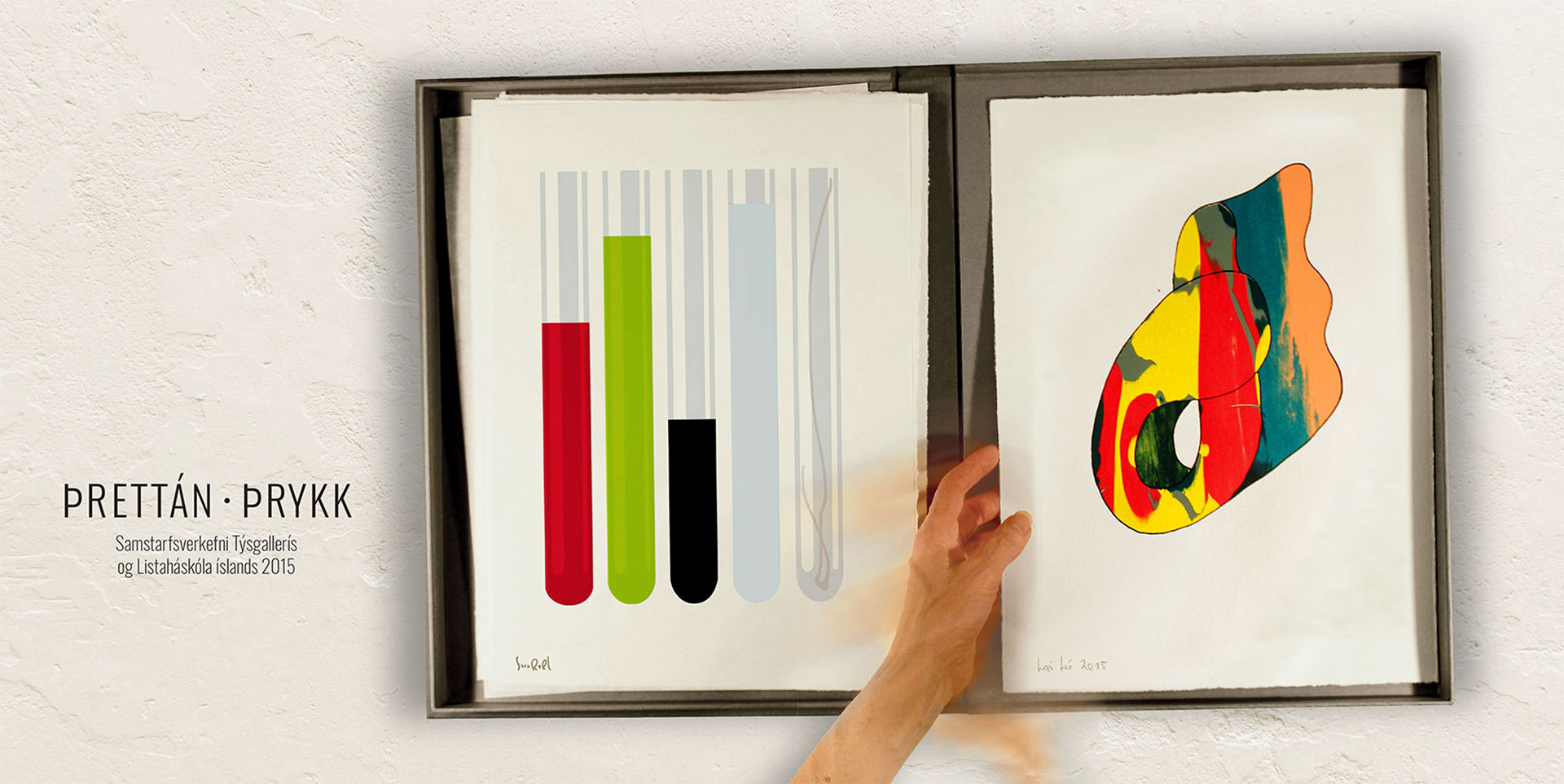
UM VERKEFNIÐ ÞRETTÁN ÞRYKK
Týsgallerí hefur kallað saman þrettán listamenn til að vinna grafíkverkin sem safnað er í þessa möppu. Í hópnum má finna þaulreynda listamenn – tveir þeirra hafa verið fulltrúar Íslands á tvíæringnum í Feneyjum – og aðra sem nýlega hafa lokið námi. Hópurinn endurspeglar hugsjónina að baki galleríinu: að í gegnum samstarf og fordómalaus skoðanaskipti geti myndlistin stokkið yfir kynslóðabil og miðlað hugmyndum þannig að sýn hvers listamanns frjóvgi sköpun annarra og styrki um leið hvern og einn í sjálfstæðri nálgun sinni. Þessi hugsjón hefur verið helsti styrkur íslensks myndlistarlífs síðustu áratugi og hefur þroskast í gegnum listamannarekin gallerí, sýningarverkefni og útgáfur.
Um leið hafa slík verkefni verið leiðin til að koma myndlist á framfæri við almenning; ungir íslenskir listamenn hafa ekki beðið eftir því að söfn eða safnarar uppgötvi þá og komi á framfæri en hafa í staðinn sjálfir leitast við að koma á samskiptum við þá sem njóta listarinnar. Þetta var kannski helsta ástæðan fyrir því að hér varð mikil vakning í grafískri myndlist á fyrstu árum áttunda áratugarins. Með grafíkinni gafst listamönnum tækifæri til að koma verkum sínum á framfæri við stærri hóp listunnenda og gerði fleirum fært að eignast listaverk og njóta þeirra heima í daglegu lífi sínu. Grafíklistin er í eðli sínu opin og demókratísk.
Þegar þessi tækni festi fyrst rætur á Vesturlöndum á fimmtándu öld varð bylting í myndrænni miðlun sem var ekki síður afdrifarík en prenttækni Gutenbergs. Almenningur hafði fram að því varla séð myndlist nema í kirkjum en allt í einu var hægt að nálgast hana alls staðar og grafíklistin endurspeglaði ekki bara smekk biskupa og aðalsmanna heldur talaði beint til fólksins og talaði um það sem skipti almenning máli.
Á Íslandi á áttunda áratugnum varð grafíklistin líka til þess að breiða út hugmyndir og hugsjónir sem brunnu á okkur: hugmyndir um kvennabaráttu, lýðræði og mátt fólksins til að hafa áhrif á samfélagið og menninguna. Myndlist er máttlítil ef enginn sér hana. Hún er fyrst og fremst samræða og við þurfum á henni að halda því í myndlist er hægt að hugsa margt sem ekki verður svo auðveldlega fært í orð.
Texti eftir Jón Proppé
ABOUT THE PROJECT
Týsgallerí has gathered thirteen artists to produce the prints in this collection. The group includes seasoned artists – two of them have represented Iceland at the Venice Biennale – as well as others who have only recently completed their studies. This grouping reflects the core vision behind the gallery: that through collaboration and open communication art can jump the generational gap and mediate ideas in such a way that the work of each one can contribute to the creative process of others while still fostering individual development. This vision has been the primary strength of the Icelandic art scene for the past decades, nurtured through artist-run galleries, exhibitions and publications.
Such projects also open a channel of communication to the wider public: young Icelandic artists have not waited for museum and collectors to discover them and publicise their work but have instead formed a direct alliance with those who seek and love to enjoy art. This was perhaps why so many artists turned to printmaking in the early 1970s. Through prints, artists could present their work to a much wider public and allow more people to acquire art and enjoy it at home as a part of their daily life. Printmaking is an open and democratic medium.
When this technique was first established in the West in the fifteenth century it triggered a revolution in the mediation of visual material, no less important than the development of moveable print. Most people had never seen art except in church but suddenly it was to be seen everywhere. Art no longer reflected only the tastes of the bishops and nobility; it spoke directly to the public and spoke of things that mattered to ordinary people.
Similarly, in Iceland in the 1970s, printmaking served to spread ideas and concerns that were topical: the struggle for gender equality, democracy and the right of common people to have a say in society and culture. Art has little effect if it is not seen. Art is primarily a form of dialogue and we all need it because in art so much can be expressed that we cannot easily convey through words.
Text by Jón Proppé
Divi
Nec sed ac diam, ullamcorper est non. Ut et eget nisi, congue. Pretium euismod ultrices ac lorem. Aliquam tortor quam sollicitudin viverra sed dictum facilisis.